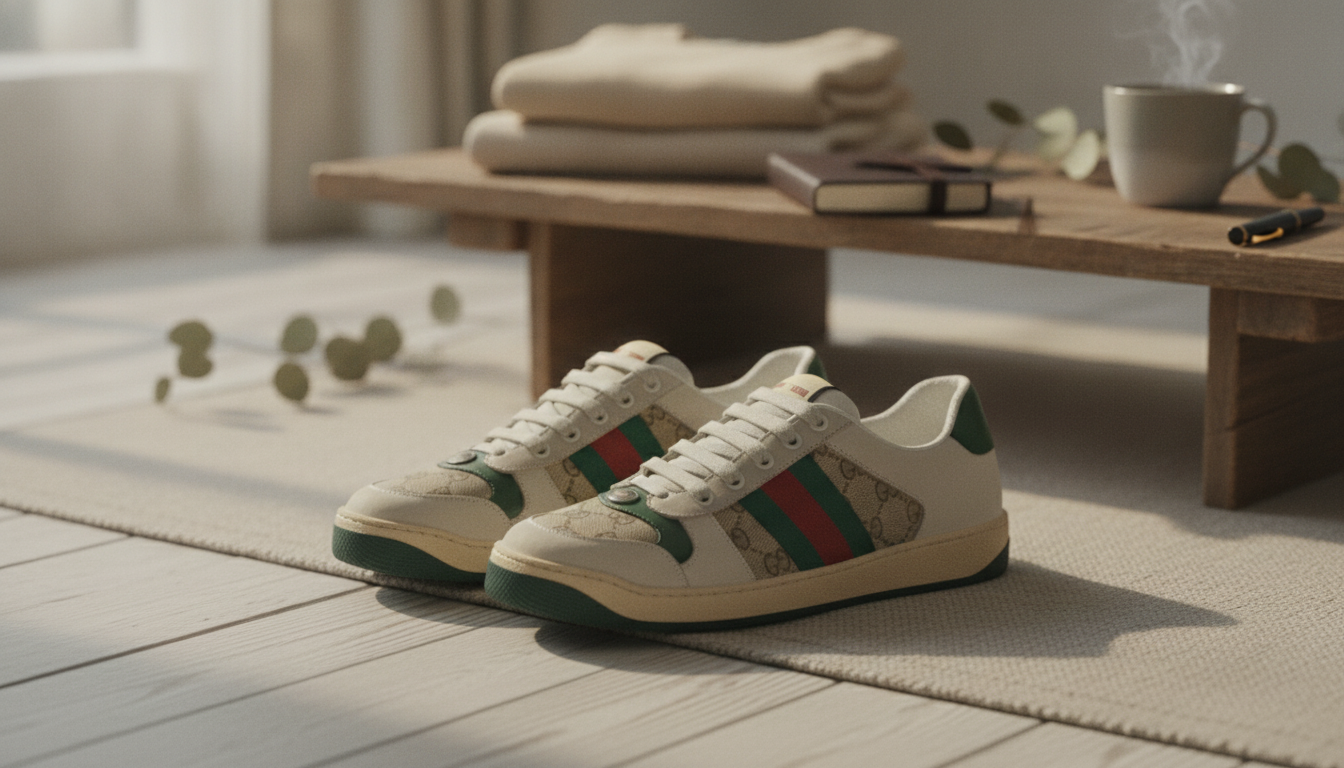
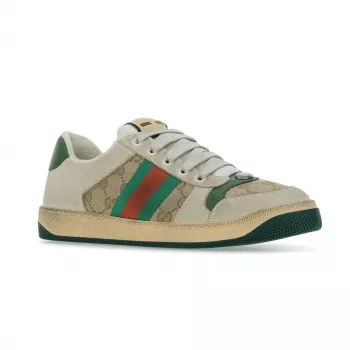
Gucci monogram lace-up sneakers with iconic detailing blend a recognizable heritage pattern with an everyday silhouette that works across casual and smart-casual wardrobes. The monogram reads as polished without relying on loud color blocking, while the lace-up build keeps the look grounded in classic sneaker styling. Below is a practical guide to what makes these sneakers stand out, how to dial in fit, what comfort feels like over time, and how to keep the monogram and trim looking crisp with low-effort care. For more guidance, see [PDF] Volume 5, Issue 6, Winter 2021 – The Journal of Dress History.
The first impression comes from the monogram upper: it’s a signature pattern that signals luxury without needing heavy contrast or oversized graphics. Because the base is still a low-profile lace-up sneaker, it pairs easily with everyday staples and doesn’t feel “costume-y” even when worn often. For further reading, see Authentic Vintage CHANEL Denim Blue Black Cap Toe CC LOGO ….
Designer sneakers should look intentional up close. A quick inspection when you unbox helps confirm the pair is finished cleanly and will wear well over time.
If you’re curious about broader leather and material responsibility standards in fashion supply chains, the Leather Working Group provides background on certification and auditing frameworks. For brand-level style references and official product context, visit the Gucci Official Website.
Most lace-up sneakers feel better after a few wears, especially if the upper has structure. Early on, pay attention to friction points and let the materials flex naturally rather than forcing long, all-day wear immediately.
Fit comes down to three feelings: toe space, heel security, and midfoot comfort. A small mismatch can turn a premium sneaker into a “special occasion only” pair, so it’s worth doing a quick checklist before committing to outdoor wear.
| Check | What to feel | Simple fix if it’s off |
|---|---|---|
| Toe room | Comfortable wiggle room; no toe touching the front | Try a half size up or a thinner insole |
| Heel slip | Minimal lift; stable step | Use heel-lock lacing or slightly tighten the top eyelets |
| Midfoot pressure | Secure but not tight across the top of the foot | Skip an eyelet or loosen laces across the midfoot |
| Arch comfort | Neutral support without hot spots | Swap to a supportive insole if needed |
A monogram sneaker has built-in visual interest, so the easiest styling wins usually come from restraint: clean lines, minimal competing logos, and thoughtful textures.
Dry brush first to remove grit, then spot clean with a lightly damp cloth and mild soap. Avoid soaking, harsh solvents, and direct heat; air-dry fully and store stuffed or with shoe trees to maintain shape.
It varies by foot shape and volume, so confirm with toe room, heel slip, and midfoot pressure checks. Try lacing adjustments or an insole change before moving up or down in size.
Minimal, monochrome, and tailored-casual outfits work best because they keep the sneaker as the focal point. Limit other bold logos and lean on clean silhouettes and premium textures.




Leave a comment