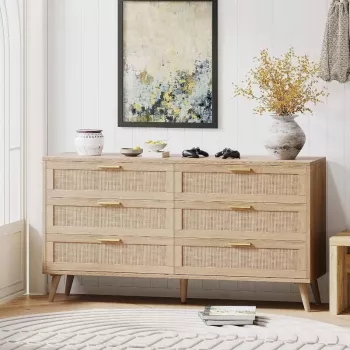
A double dresser should fit the wall you’re using, leave comfortable walking space, and provide the storage you actually need. In most bedrooms, a practical “double” size lands around 50–70 inches wide, about 18–20 inches deep, and roughly 30–36 inches tall. That range works well because it offers generous drawer space without dominating the room.
Plan for clear paths around the dresser. A good target is 30–36 inches of open space in front of the dresser so drawers can open fully and you can move comfortably. If the dresser sits near a bed, aim for enough clearance between the bed and dresser for everyday use—tight aisles make even a great dresser feel inconvenient.
For balance, the dresser shouldn’t crowd corners or door trim. As a rule of thumb, keep a few inches of breathing room on each side, and avoid placing a wide dresser where it blocks vents, switches, or closet access. If you’re pairing it with a mirror or wall art, a width that roughly aligns with the piece above it creates a cleaner, more intentional look.
Most double dressers are around 18–20 inches deep; that’s deep enough for folded clothes while still feeling streamlined. Deeper units can be great for bulky items, but they demand more floor space and can pinch walkways in smaller bedrooms.
If the dresser doubles as a media console or a getting-ready surface, 30–36 inches tall is comfortable for most people. Taller options save floor space visually but may feel top-heavy if the room is compact.
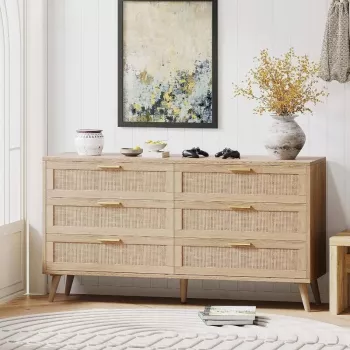
For a real-world example of proportions, storage layout, and styling, see this guide to a modern rattan double dresser with six drawers and gold handles: https://brilliantfindpulse.shop/guide-modern-rattan-double-dresser-6-drawers-gold-handles/.
Leave about 30–36 inches in front of the dresser so drawers open fully and you can stand and move comfortably. If the area is a main walkway, closer to 36 inches feels better day to day.





Leave a comment