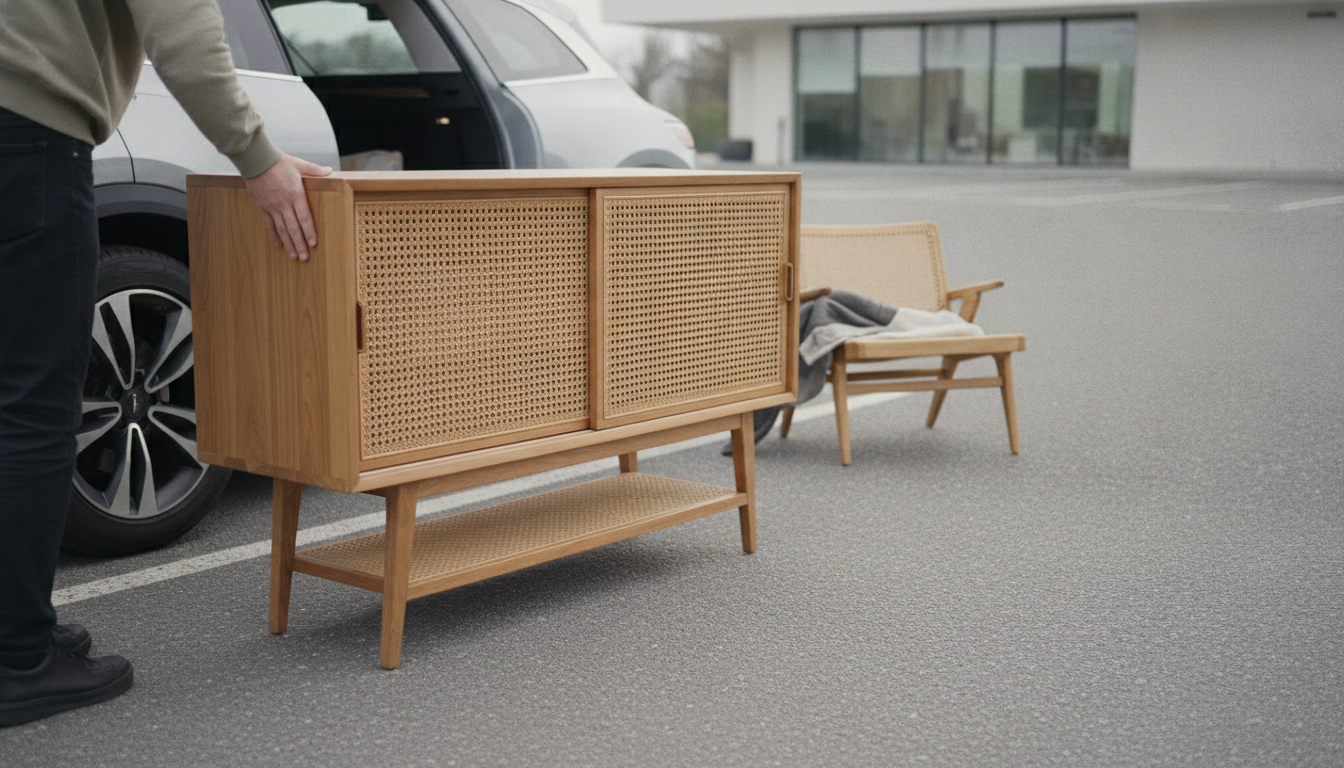
Yes—rattan pairs naturally with mid-century modern because both styles celebrate clean lines, warm materials, and a relaxed, livable feel. Mid-century spaces often rely on wood tones, tapered legs, and simple silhouettes; rattan adds texture and lightness without fighting that streamlined look. The key is choosing pieces with crisp forms and letting the weaving act as the “pattern” in the room.
Start with structure. Look for rattan or cane details set into a straightforward frame—think rectangular drawer fronts, squared cabinet doors, or a low-profile headboard. Mid-century modern tends to avoid overly ornate curves, so rattan works best when it’s a panel or accent rather than the entire piece becoming a dramatic statement shape.
Keep the palette grounded: walnut, teak, oak, black, and warm metals like brass or gold complement rattan’s honey tone and help it feel intentional. If you want the look to read more “MCM” than coastal, limit extra boho cues (macramé, tassels, too many global prints) and lean into classic mid-century companions like a simple arc floor lamp, geometric art, or a tailored wool rug.
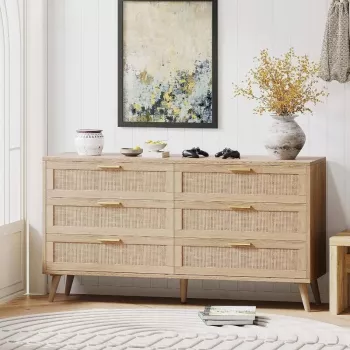
Rattan is especially strong as an accent on case goods and seating. A dresser or sideboard with rattan drawer fronts can soften a boxy silhouette while still feeling refined. Chairs with cane backs, a rattan-front media console, or a nightstand with woven panels all add dimension without cluttering the visual line that mid-century modern is known for.
For a practical example of rattan integrated into a modern, structured profile, see the details in this guide: https://brilliantfindpulse.shop/guide-modern-rattan-double-dresser-6-drawers-gold-handles/.
Use rattan as a bright, textural contrast and repeat a unifying finish—like warm brass or black hardware—so the mix feels cohesive. Keeping the rattan pieces more structured helps them blend with darker, classic mid-century woods.



Leave a comment