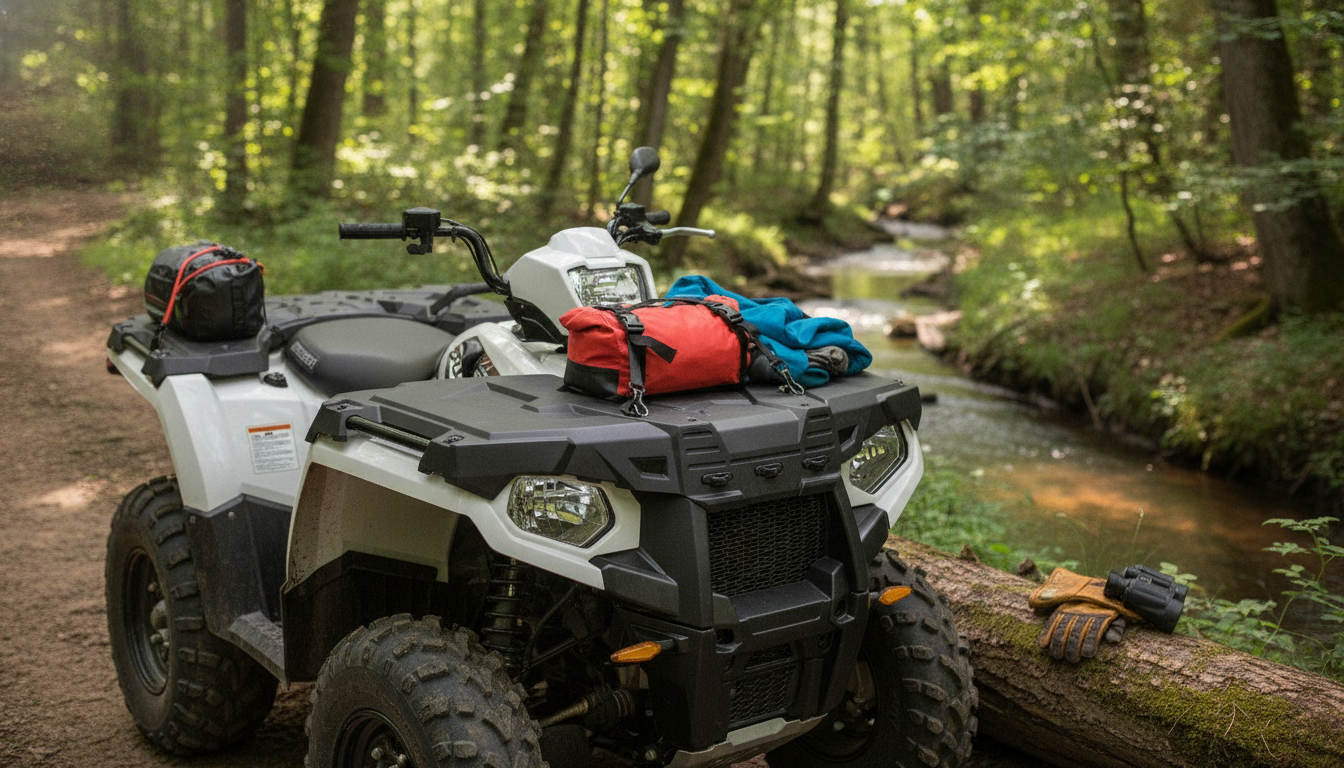
A front rack storage cover keeps essential gear protected, organized, and easy to reach while riding. Mounted on the ATV’s front rack, it helps reduce loose straps and shifting cargo, adds a protective lid against rain and trail spray, and keeps frequently used items accessible without digging through rear bags or boxes.
Front rack space is prime real estate: it’s visible, reachable, and ideal for items that need quick access. A lidded storage cover turns that space into a more controlled compartment—helpful on bumpy trails where loose tools and small gear can bounce, rattle, or disappear.
A front rack lid cover earns its keep anywhere conditions are messy, stop-and-go, or unpredictable. It’s also a practical upgrade for riders who want a cleaner setup than an open rack piled with bungeed-down gear.
Safety and load management matter, especially when adding any weight up front. For general ATV safety guidance, the Consumer Product Safety Commission offers rider education resources here: https://www.cpsc.gov/Safety-Education/Safety-Guides/Sports-Fitness-and-Recreation/ATVs.
Not all rack covers are built the same. The best options hold up to vibration, rack abrasion, and weather while staying easy to open when hands are cold, muddy, or gloved.
If you routinely carry repair gear, remember that tire load and inflation guidance can affect ride quality and handling; general tire industry resources are available at https://www.ustires.org/.
Fit is the difference between “solid and quiet” and “shifts around and annoys you all day.” Before buying, measure your rack and think through real-world clearance—especially on ATVs with brush guards, raised rack rails, or accessories mounted near the front plastics.
| What to check | Why it matters | What to confirm before buying |
|---|---|---|
| Rack dimensions | Prevents interference and shifting | Measure rack width/depth and compare to product footprint |
| Attachment method | Determines stability and ease of install | Straps/buckles reach secure anchor points without rubbing |
| Lid seal and edge design | Improves weather protection | Lid overlaps opening; seams and zipper/closure area look protected |
| Access while seated | Improves convenience on quick stops | Opening direction and pulls are reachable without dismounting fully |
| Load type | Avoids crushed or noisy contents | Rigid items fit without stressing lid; soft items won’t shift excessively |
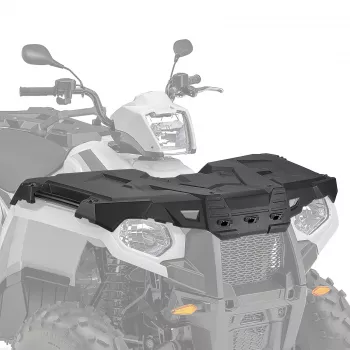
If the goal is fast access and a cleaner front rack setup, the ATV Front Rack Lid Storage Cover is built to add a lidded storage area right where you need it. It helps keep essentials contained, reduces clutter compared to loose bungees, and adds a practical barrier against trail spray, dust, and debris.
For riders who also want something comfortable and durable for travel days or downtime at camp, consider Brunello Cucinelli Men’s Cotton Denim Pants.
It can, because added weight on the front rack changes how the ATV responds to steering input and bumps. Keep loads light-to-moderate, distribute weight evenly, and do a short test ride after installation so you can re-tighten straps and confirm stability.
A lid and weather-resistant construction reduce direct exposure, but prolonged rain or water crossings can still introduce moisture. For critical items, use an inner dry bag and double-check that the lid and closures are fully secured before riding.
Store lighter, frequently used items up front—gloves, basic tools, a first-aid kit, and small repair gear—so they’re easy to reach. Keep heavier cargo and dense items toward the rear or in a dedicated rear box to help maintain balance and predictable handling.




Leave a comment