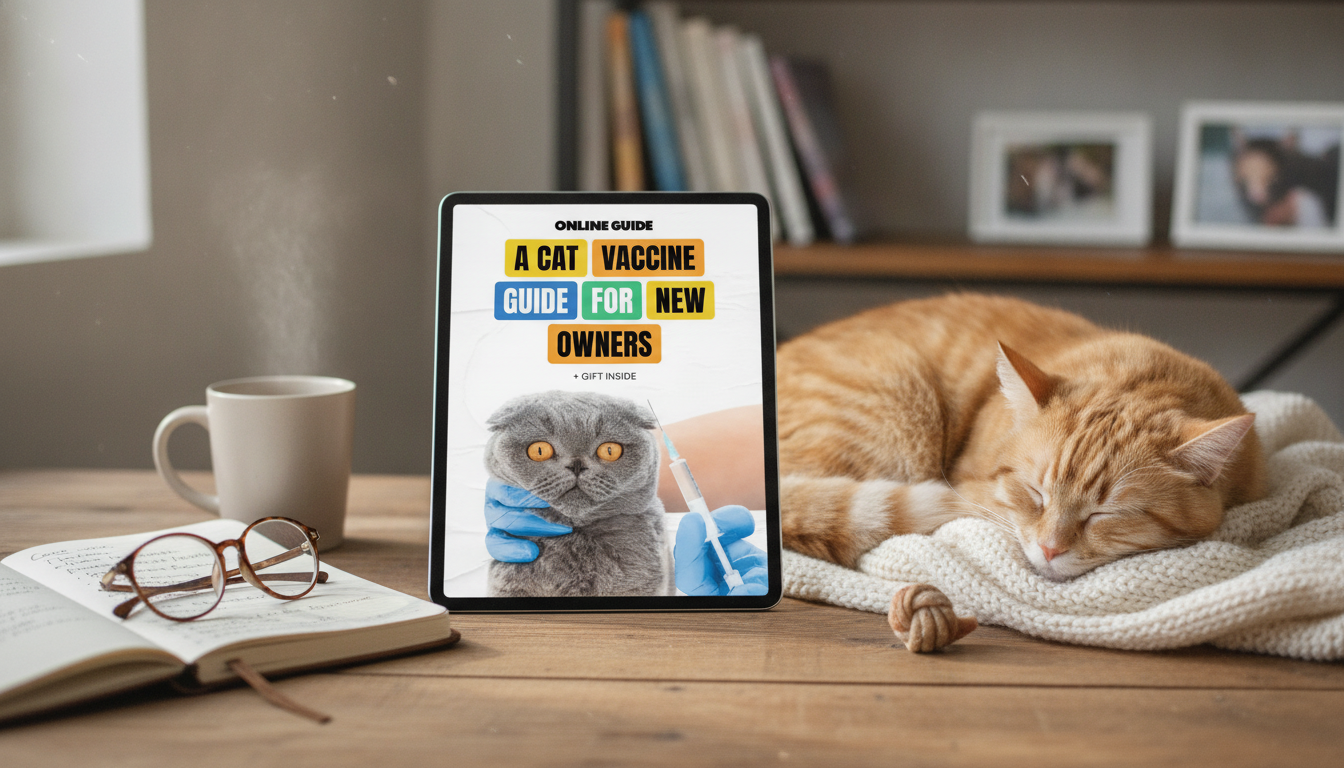
Vaccines help protect cats from contagious diseases that can spread quickly, cause long-term health problems, or become life-threatening. For new owners, the hardest part is usually not deciding “yes or no,” but knowing which vaccines matter, when they’re given, and what to expect at each appointment. This guide organizes the essentials—core vs. lifestyle-based shots, typical timelines, common reactions, and planning tips—so decisions feel clear and manageable.
Vaccines “train” the immune system to recognize specific viruses or bacteria before real exposure happens. When a vaccinated cat encounters that germ later, the body can respond faster—often preventing illness entirely or reducing severity.
For deeper background on feline vaccine principles and risk-based planning, see the American Association of Feline Practitioners (AAFP).
Core vaccines are widely recommended for most cats because the diseases are common, severe, or difficult to avoid even with an indoor lifestyle.
Rabies requirements and public health guidance can vary by location; the CDC’s rabies information is a helpful reference when reviewing why this vaccine is treated so seriously.
Lifestyle-based vaccines depend on exposure risk—how likely your cat is to encounter unfamiliar cats or contagious environments.
Vaccination choices should align with your cat’s real-world risk and your local veterinary guidance. The AVMA’s vaccination overview offers a useful owner-level perspective on how vaccines are evaluated and used.
Kittens usually begin vaccines early because maternal antibodies fade over time and curiosity increases contact with germs. The “series” approach matters: early doses prime the immune system, and boosters help build stronger, longer-lasting protection.
Adult cats with an unknown vaccine history often follow a “restart” or catch-up plan to establish reliable immunity. Rabies schedules vary by region and vaccine type, so local rules and your veterinarian’s timing should always come first.
| Cat age or situation | Common vaccines discussed | Notes to plan for |
|---|---|---|
| 6–8 weeks (kitten) | FVRCP (start series) | Series timing is important; keep appointments close to the recommended interval. |
| 10–12 weeks (kitten) | FVRCP (booster), FeLV (often discussed) | FeLV is commonly recommended for kittens, especially with any chance of outdoor exposure. |
| 14–16 weeks (kitten) | FVRCP (final in series), Rabies (often given around this time), FeLV (booster if started) | Bring questions about indoor/outdoor plans and future boarding/grooming. |
| 1 year | FVRCP booster, Rabies booster, FeLV booster if indicated | A key milestone: sets the long-term booster rhythm. |
| Adult cat with unknown history | FVRCP series as needed, Rabies per law, FeLV based on risk | Veterinarian may recommend testing (FeLV/FIV) and scheduling boosters to “rebuild” coverage. |
| Ongoing adult boosters | FVRCP and Rabies at intervals recommended by veterinarian | Intervals vary by vaccine type, health status, and local rules. |
The best plan is the one that matches your cat’s exposure risk and health status—without overcomplicating it.
Yes, core vaccines are still widely recommended because exposure can happen through a brief escape, visitors, contaminated surfaces, or contact with other animals. Rabies vaccination may also be required by local law, so your veterinarian will help you follow the correct schedule.
Kittens commonly start the FVRCP series around 6–8 weeks of age, followed by boosters every few weeks until the series is complete. Rabies is often given around 14–16 weeks (depending on local rules), and FeLV is commonly discussed for kittens based on exposure risk.
Mild sleepiness, a small drop in appetite for a day, or temporary soreness at the injection site can be normal. Facial swelling, hives, vomiting, trouble breathing, collapse, or severe lethargy are urgent warning signs—contact a veterinarian or emergency clinic right away if they occur.







Leave a comment