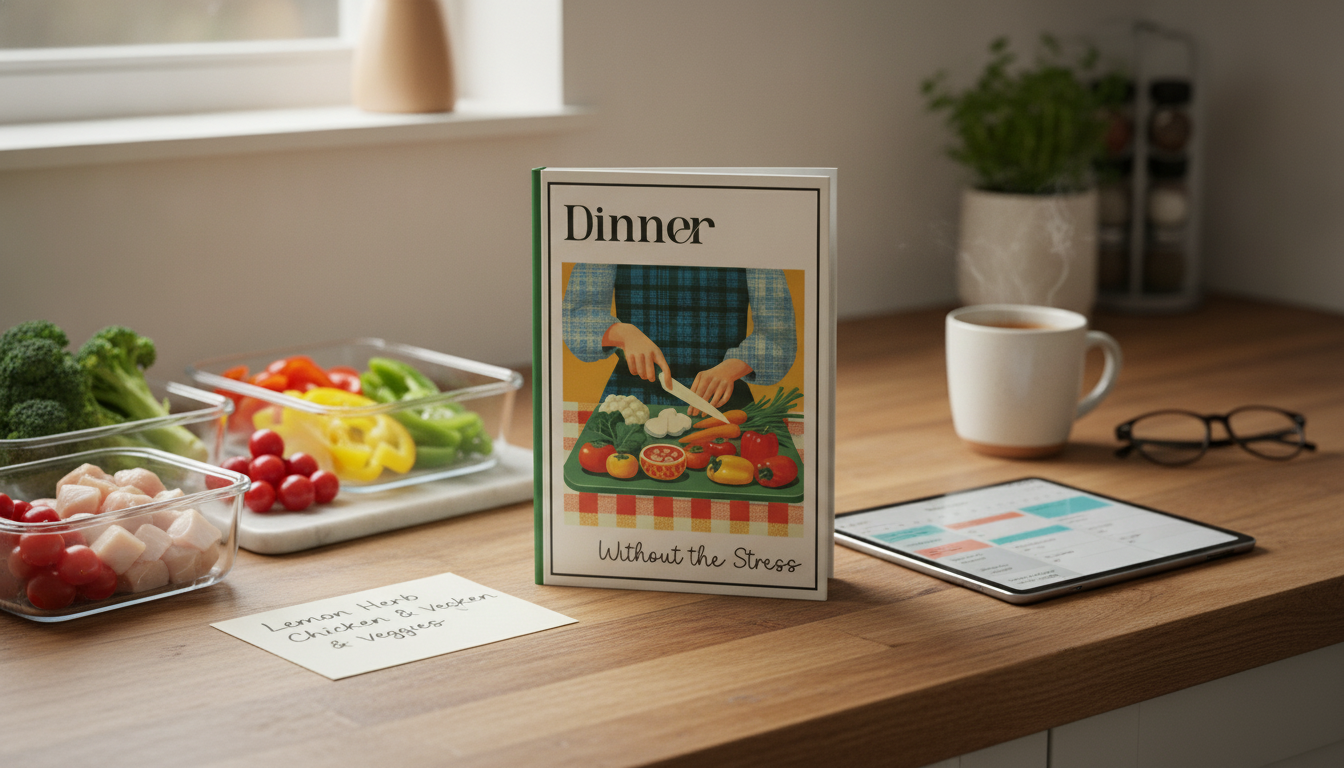
A calm dinner routine isn’t about cooking elaborate meals—it’s about removing daily decision fatigue. With a few repeatable steps (pick, shop, prep, cook, reset), dinner becomes predictable, flexible, and far less mentally draining for busy families and professionals. The goal is to make most of the choices once, then let the week run on rails—even when life gets loud.
Many people enjoy cooking, but still dread “figuring out dinner.” That disconnect usually comes from everything surrounding the meal, not the actual sautéing or baking.
Once the system exists, weeknights stop feeling like a daily test. They start feeling like a simple sequence.
Think of this as a loop you run every week. Each part is small on purpose.
Choose a small set of repeatable dinners from a short list of go-to meals. Aim for 3–5 planned dinners plus one flexible night. You’re not designing a perfect menu—you’re selecting defaults.
Buy only what supports the plan plus a small “backup” set for chaotic nights. Shopping gets dramatically easier when you stop browsing and start executing a list.
Wash and chop staples, batch-cook a protein or grain, and portion snacks/sides. This is where the week gets lighter: fewer knives, fewer pans, fewer last-minute surprises.
Aim for 20–40 minute meals on weeknights. Sheet-pan dinners, stir-fries, grain bowls, and one-pot recipes keep momentum high when energy is low.
Do a quick kitchen close-down and glance at tomorrow’s plan. Even a small reset—clear counters, pack leftovers, set out one key ingredient—reduces tomorrow’s stress more than it seems like it should.
| Day | Routine step | Time target | What it looks like |
|---|---|---|---|
| Friday or Saturday | Pick | 10–15 min | Choose 4 dinners + 1 flexible night; confirm schedule conflicts |
| Saturday or Sunday | Shop | 30–60 min | Order pickup/delivery or shop with a focused list |
| Sunday | Prep | 30–90 min | Chop vegetables, cook a batch grain, marinate or pre-cook protein |
| Mon–Thu | Cook | 20–40 min | Rotate planned dinners; use backups when needed |
| Daily | Reset | 5–10 min | Clear counters, pack leftovers, set out tomorrow’s key ingredient |
The easiest plan to follow is the one you’ve already proven works on a random Tuesday.
If nutrition goals are part of the equation, keep it simple: build plates with vegetables, protein, and satisfying carbs. Helpful references include the MyPlate Plan and Harvard’s Healthy Eating Plate.
A dinner routine survives busy weeks when groceries are set up to support it.
This keeps the plan from collapsing when something small goes missing (like tortillas) and prevents the “we have food, but nothing to make” feeling.
Prep doesn’t need to mean cooking five full meals in containers. It can be lighter—and more flexible.
For a step-by-step setup, see the Dinner Without the Stress digital guide (digital download). It’s designed to be easy to pull up on a phone/tablet and reuse week after week.
Plan 3–5 dinners plus 1 flex night. Leaving open space makes it easier to use leftovers, handle social plans, and swap in a backup meal without feeling like the week is “off track.”
Keep a Level 1–3 fallback: a planned meal, a 10–15 minute pantry/freezer option (eggs, quesadillas, pasta + sauce, canned beans, frozen veggies, rotisserie chicken), and a simple assembled meal (yogurt + fruit, toast + eggs, salad kit + protein). The best backup is the one you can make without thinking.
Use modular meals like tacos, bowls, or pasta bars where each person builds their own plate. Keep one or two kid-approved sides on repeat (fruit, rice, roasted potatoes) and plan around the calendar first so meals match the nights you actually have time.







Leave a comment