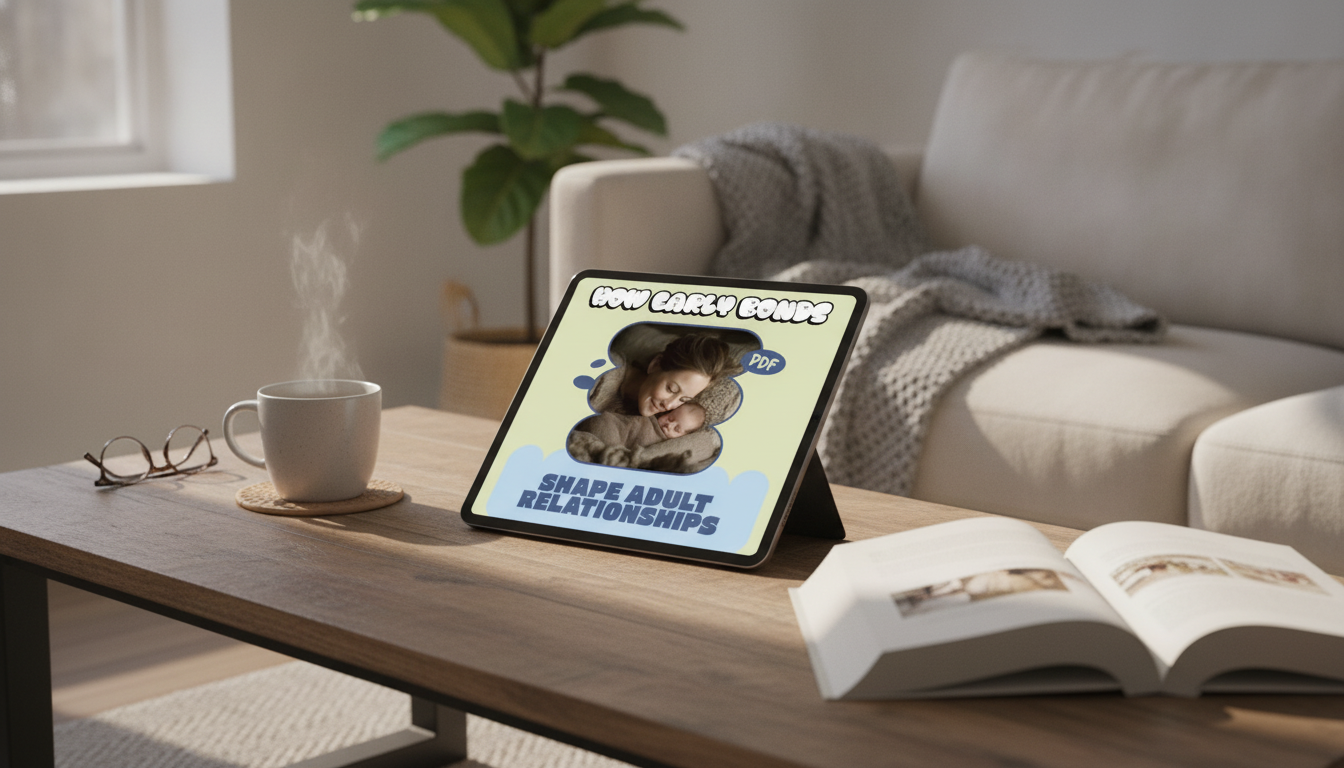
Early caregiving experiences influence expectations about closeness, trust, and conflict. Those patterns can show up later as comfort with intimacy, sensitivity to rejection, or a tendency to distance when things feel emotionally intense. Attachment isn’t a life sentence—these are learned strategies that can be understood, softened, and replaced with healthier habits through awareness, communication, and supportive relationships.
Attachment describes how people learn to seek comfort, safety, and connection under stress. In childhood, the brain and nervous system are constantly taking notes: Is closeness safe? and Will someone respond when I need help?
Over time, repeated experiences become default expectations—often so automatic they feel like “personality.” Those expectations can shape dating choices, friendship dynamics, and long-term partnership habits, especially during conflict or uncertainty. Importantly, attachment patterns typically form from patterns over time, not one single moment, and they can shift across life with new experiences and intentional practice.
For a clear definition and background, see the APA Dictionary of Psychology entry on attachment and an accessible overview of attachment theory at Simply Psychology (Bowlby & Ainsworth).
Most people can recognize parts of themselves across more than one pattern, and many show different tendencies depending on context (work, friendships, romantic relationships) and current stress levels. Still, these categories can be useful shortcuts for naming what’s happening.
| Pattern | Common trigger | Common reaction | Helpful practice |
|---|---|---|---|
| Secure | Conflict or stress | Stays engaged; seeks repair | Name the issue; collaborate on a solution |
| Anxious | Slow replies; perceived distance | Protest behaviors; reassurance seeking | Self-soothe first; ask directly for reassurance |
| Avoidant | Pressure to share feelings | Shuts down; changes subject; withdraws | Try small disclosures; tolerate discomfort in steps |
| Fearful-avoidant | Intimacy followed by uncertainty | Push-pull; intense arguments or sudden cutoff | Slow the pace; use clear boundaries and consistent repair |
Attachment tends to show up most vividly when something feels uncertain—tone changes, delayed replies, an unexplained shift in routine, or conflict that threatens connection. Common loops include:
Research on adult attachment and relationship functioning is broad; a starting point for exploring the literature is the National Library of Medicine (PubMed) database.
When relationships feel intense, people often focus on the surface issue (“You didn’t text back”). The faster path to change is mapping the sequence underneath: trigger → belief → protective move.
A simple journaling prompt that works: “When I felt _____, I told myself _____, so I did _____.” Repeat it for three recent moments and look for patterns.
For a step-by-step, practice-focused resource, consider How Early Bonds Shape Adult Relationships – A Practical Guide to Understanding Attachment & how attachment affects later relationships. Using a guide steadily (10–15 minutes a few times per week) often works better than trying to overhaul everything at once.
Sleep deprivation and hormonal shifts can intensify these reactions, which is why support during postpartum is both emotional and practical. If that season is part of your life (or your partner’s), Postpartum Mental Health Support | Compassionate Postpartum Mental Health Support eBook for New Moms, Emotional Healing, Self-Care & Long-Term Well-Being can be a helpful companion alongside professional care when needed.
Yes—patterns can shift through supportive relationships, therapy, and repeated practice of secure behaviors like direct communication, self-regulation, and consistent repair.
For some, intimacy triggers a threat response learned early (fear of dependence, loss of autonomy, or getting hurt), leading to distancing, minimizing feelings, or focusing on flaws.
Call a time-out with a clear return time, regulate first, then restart with one concrete request and one validation statement to lower threat and reopen collaboration.





Leave a comment