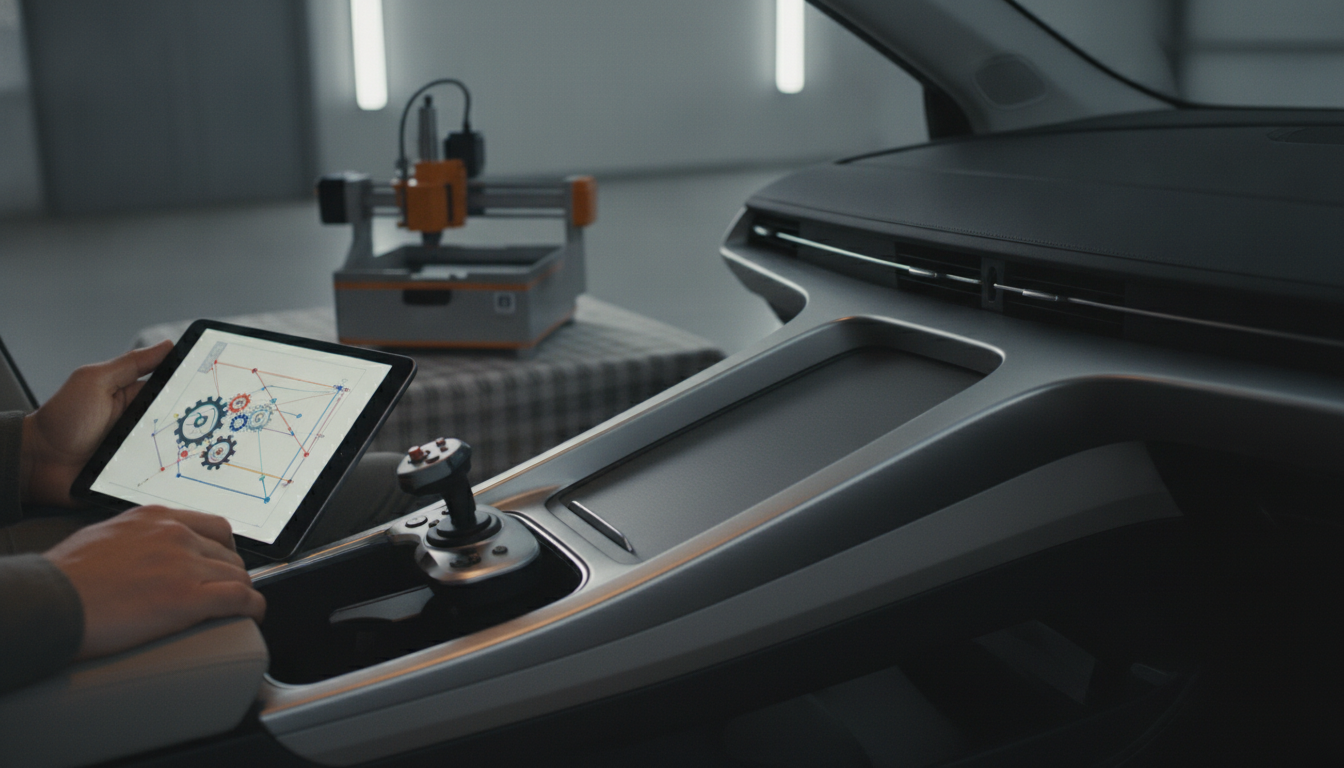
CNC (computer numerical control) machines move by converting digital instructions into precise mechanical motion along one or more axes. A CNC controller reads a program (often G-code) that specifies where the tool should go, how fast it should travel, and when it should cut, drill, or mill. From there, the machine’s drive system turns those commands into controlled movement of either the cutting tool, the worktable, or both.
The controller is the “traffic director.” It interprets coordinates and feed rates, then outputs signals to the axis drives. Many machines use closed-loop control, where the controller constantly compares commanded position to actual position and corrects any error in real time.
Most CNC axes are driven by either stepper motors or servo motors. Steppers move in discrete steps and are common in lighter-duty equipment. Servos use feedback to maintain accuracy and torque at higher speeds, which is why they’re common in industrial mills, lathes, and routers.
Motors typically spin, but CNC axes usually need linear movement. That conversion is handled by mechanical components such as ball screws (rotating screw drives a nut along the axis), lead screws (similar but typically less precise), or linear motors (direct linear force with minimal mechanical contact). Linear guideways and bearings keep motion smooth and rigid.
Encoders on motors or scales on the axes report position back to the controller. This feedback loop helps the machine hold tight tolerances, compensate for load changes, and maintain repeatability across long production runs.
Basic CNC machines move in X, Y, and Z. More advanced models add rotary axes (A, B, or C) that spin the part or the tool, enabling complex 3D shapes and multi-sided machining without constant re-fixturing.
For a practical, skills-focused perspective on how automation and AI are reshaping technical work, see this guide.
Stepper motors move in fixed increments and are simpler, while servo motors use feedback to continuously correct position and maintain torque at higher speeds. Servos are typically faster and more accurate for demanding machining tasks.







Leave a comment