Indoor Cat Enrichment Checklist: Daily & Weekly Ideas
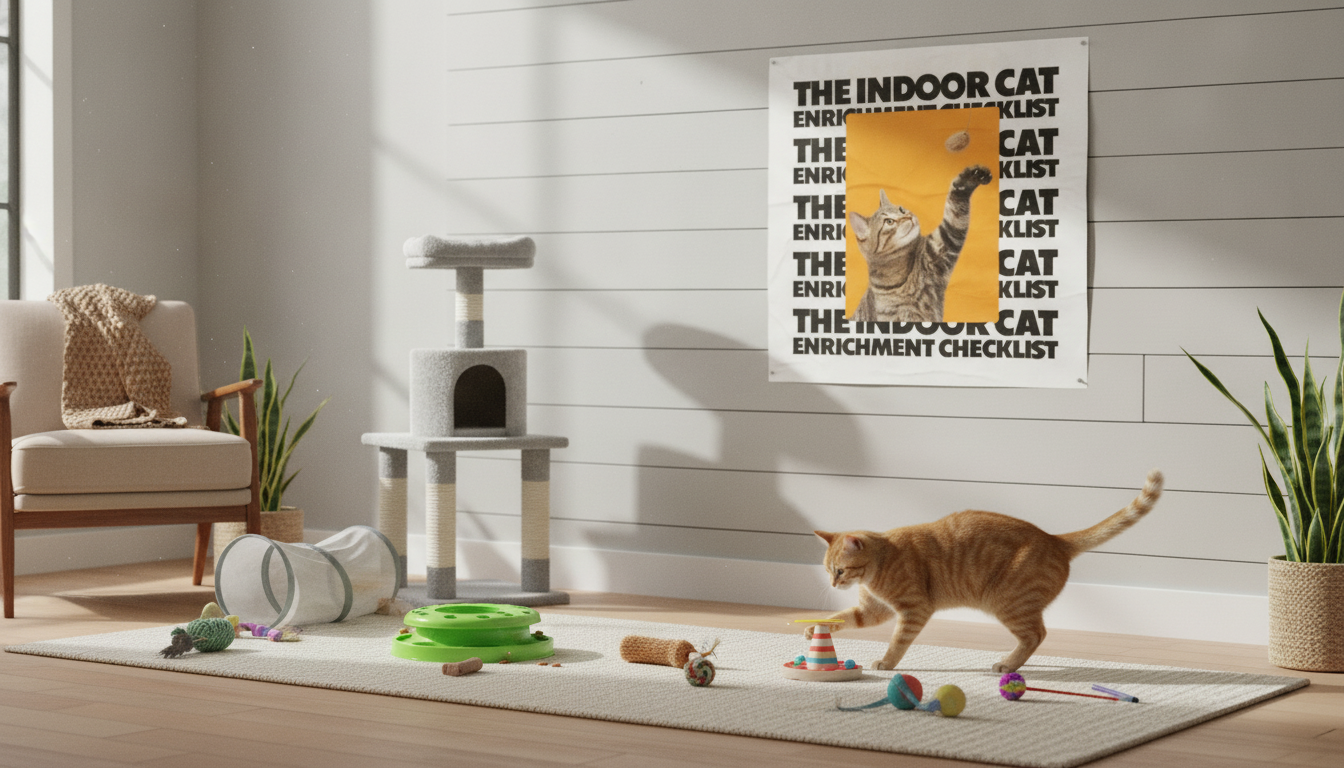
The Indoor Cat Enrichment Checklist: Simple Ways to Keep Indoor Cats Happy and Stimulated
Indoor cats do best when their day includes a mix of hunting-style play, climbing, problem-solving, and true downtime. When those needs aren’t met, many cats “create their own fun” through nighttime zoomies, furniture scratching, counter surfing, yowling, or overgrooming. The checklist below organizes enrichment into practical categories so it’s easy to build a routine that fits any home, schedule, and age—from kittens to seniors.
For broader guidance on feline behavior and environment, see the American Association of Feline Practitioners (AAFP) guidelines and the ASPCA enrichment resources.
Start With the Cat’s Daily Needs: Hunt, Climb, Scratch, Rest, Explore
A “needs-first” mindset keeps enrichment effective. Instead of adding more random toys, focus on activities that satisfy natural behaviors: hunting, vertical movement, scratching, safe exploration, and predictable rest.
- Small doses beat one long session: 5–10 minutes of interactive play 1–3 times daily often works better than a single marathon.
- Build in recovery: Provide quiet zones (a bed in a low-traffic room, a covered cave, or a high perch) so stimulation doesn’t turn into stress—especially in multi-pet homes.
- Read the signals: Tail lashing, pinned ears, sudden biting, crouching, or hiding can mean “too intense” or simply “wrong type of play.”
The Indoor Cat Enrichment Checklist (Daily/Weekly)
- Interactive hunt play: Use a wand toy or prey-mimic sequence (stalk → chase → pounce → “catch”), then offer a small meal or treat to complete the “hunt.”
- Food puzzles or scatter feeding: Rotate puzzle types. Start easy, then increase difficulty as confidence builds.
- Vertical territory: Provide at least one high perch or cat tree; add a stable window perch for “cat TV.”
- Scratching options: Offer both vertical and horizontal scratchers; place one near sleeping areas and one near high-traffic routes.
- Safe solo toys: Rotate 3–5 toys weekly to keep novelty; store the rest out of sight between rotations.
- Scent enrichment: Cat-safe herbs (catnip for responders, silvervine), scent trails, or a new (clean) cardboard box.
- Human connection: Short training sessions (sit, target, high-five) using treats to build confidence and focus.
- Grooming and body care: Brief brushing sessions that end before the cat becomes irritated.
- Environment refresh: Weekly “rearrange” small items—new box, paper bag (handles removed), tunnel, or a blanket fort.
- Health check habit: Weekly check of nails, ears, coat, litterbox output, and appetite consistency.
Quick Checklist by Frequency
| Enrichment Item | How Often | Time Needed | Tips |
|---|---|---|---|
| Interactive play (wand/prey sequence) | Daily | 5–15 min | End with a small snack to “complete the hunt.” |
| Food puzzle or scavenger feeding | Daily or 3–5x/week | 5–10 min setup | Start simple; lower difficulty if frustration shows up. |
| Window watching + perch | Daily | 0 min (set-and-forget) | Add safe outdoor viewing (like a feeder) only if feasible and secure. |
| Scratching station reset | Weekly | 2–5 min | Sprinkle catnip on scratchers; move closer to favorite routes. |
| Toy rotation | Weekly | 5 min | Keep 70% familiar, 30% “new” for confidence + novelty. |
| Training (clicker/marker word) | 2–4x/week | 2–5 min | Quit early; reward calm sits and simple targeting. |
| New “explore” item (box/tunnel/blanket) | Weekly | 2 min | Remove strings/handles; supervise the first introduction. |
Play That Works: Building a ‘Hunt Cycle’ Routine
The most satisfying play mimics a hunt, not chaos. Try this simple flow: stalk (slow movement) → chase (faster) → pounce → “kill bite” (a final wiggle the cat can grab) → cool-down.
- Match difficulty to the cat: Seniors often prefer ground-level “sneaky” play; athletic cats may need jumps and quick direction changes.
- Prevent play aggression: Keep hands out of the game—use long toys, and pause if arousal spikes.
- Two-cat households: Offer parallel play (two wand toys) or separate sessions to reduce competition and resource guarding.
Food Enrichment Without Overfeeding
Food enrichment works best when it replaces calories rather than adds them. Measure the daily ration, then allocate part of it to puzzles or scavenger feeding.
Create a Cat-Friendly Space: Vertical Paths, Hideouts, and ‘Cat TV’
Scratching and Territory: Reduce Furniture Damage the Humane Way
Calm Enrichment: Stress-Reducing Options for Shy or Anxious Cats
If stress behaviors persist (urine marking, ongoing hiding, sudden aggression), schedule a veterinary visit to rule out medical causes. The AVMA guidance on indoor cats and enrichment is a helpful reference for environment and wellness basics.
Age-Specific Tweaks: Kittens, Adults, Seniors
A Ready-to-Use Printable Checklist
If you want a ready-made tracker you can print and reuse, grab the Indoor cat enrichment checklist (printable) and post it near the feeding area so everyone in the household follows the same routine.
Recommended Picks for an Enrichment-Friendly Home
- The Indoor Cat Enrichment Checklist: Best Indoor Enrichment for Cats to Keep Them Happy and Stimulated (digital printable)
- Luxury 70″ Fluted Fireplace TV Stand (a sturdy, enclosed console can help keep cords and clutter more manageable around “cat TV” areas)
FAQ
How much interactive play does an indoor cat need each day?
Many indoor cats do well with about 10–30 minutes total per day, split into short 5–10 minute sessions. Adjust based on age, health, and energy, and end play with a small meal or treat to complete the hunt cycle.
What are the best enrichment activities for indoor cats when the owner is busy?
Food puzzles, scavenger feeding, window perches, and a weekly toy rotation provide stimulation with minimal time. Stick to safe, cat-appropriate toys, and avoid leaving string-style or wand toys unattended.
Can enrichment help with nighttime zoomies and destructive scratching?
Yes—scheduled play earlier in the day (or before bedtime) followed by a meal often reduces late-night bursts of energy. Providing well-placed scratching stations and rewarding correct scratching can also redirect damage; ongoing issues may need veterinary or behavior support.















Leave a comment