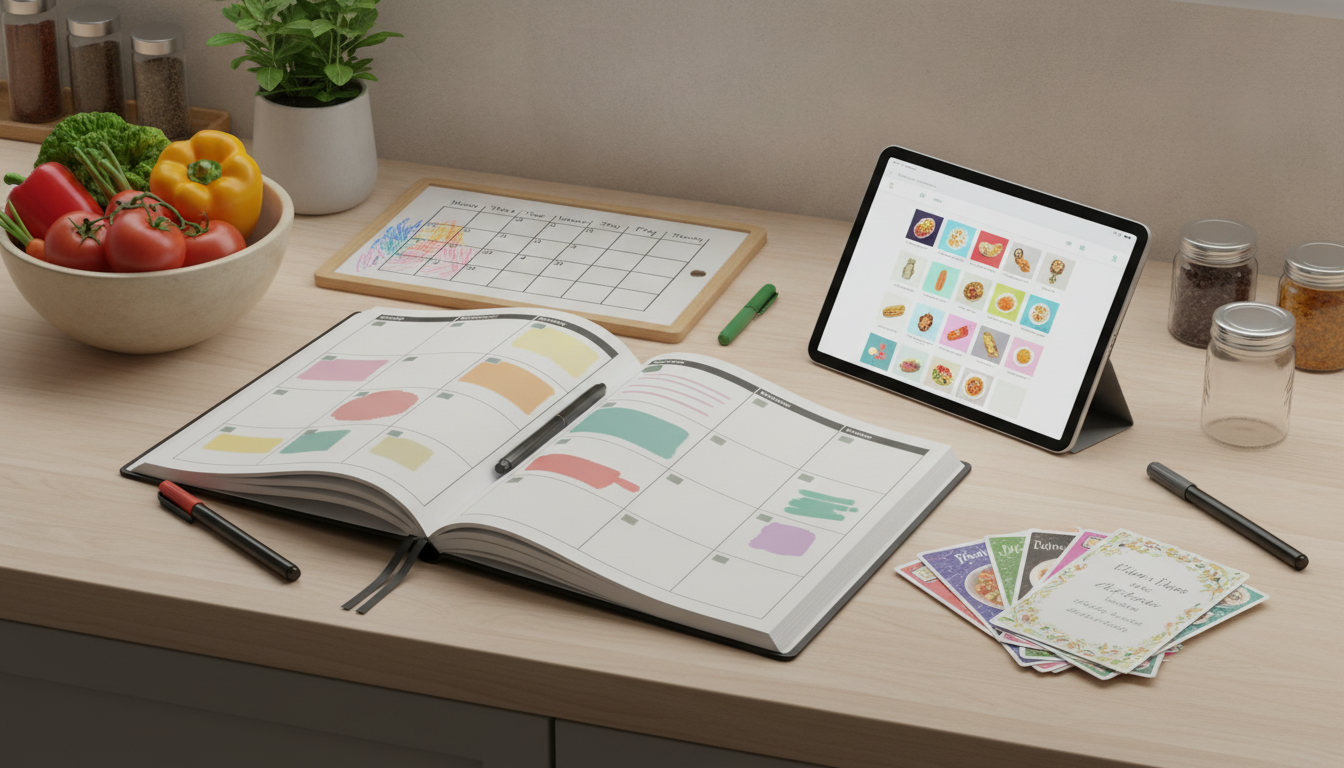
Decision fatigue hits hardest at the end of the day, when time is short and hunger is loud. A reliable weekly dinner routine works because it removes repeat decisions—what to cook, what to buy, when to prep—so weeknights run on simple defaults instead of constant negotiating.
Assign broad themes to specific nights (like tacos, pasta, sheet-pan, soup/salad, leftovers). Themes narrow your choices without locking you into the same exact meals, so you still get variety with less mental effort. Keep 2–3 go-to recipes per theme and rotate them.
Pick a single time to plan and shop (often a weekend morning or Sunday afternoon). Decide on 4–5 dinners, intentionally leaving 1–2 flexible nights for leftovers, eating out, or “pantry meals.” Fewer planned meals means less stress when life changes midweek.
Create a core list of staples you buy every week (proteins, a couple vegetables, a starch, salad kit, eggs, tortillas, rice, jarred sauce). When most items are automatic, shopping becomes fast, and you only “think hard” about a handful of add-ons tied to your planned dinners.
Do 20–40 minutes of prep once or twice per week: wash and chop vegetables, cook a grain, marinate a protein, or portion ingredients into containers. Even minimal prep can cut weeknight cooking time in half and prevent last-minute takeout decisions.
Keep one no-brainer meal on standby (like rotisserie chicken + bagged salad, frozen dumplings + steamed broccoli, or eggs + toast + fruit). A dependable fallback stops the “what now?” spiral when a plan falls apart.
For a step-by-step framework and practical examples you can copy, see this guide to creating a weeknight dinner routine that reduces planning stress.
Lean on repeatable themes, keep a short rotation of reliable recipes, and prep one or two components ahead of time. Having a backup “default dinner” prevents last-minute scrambling when the day runs long.







Leave a comment