Keeping a cat entertained for free is mostly about rotating simple “novelty” and letting your cat use natural instincts: hunt, climb, hide, and explore. A few no-cost habits can turn an ordinary day into a mini adventure without buying new toys.
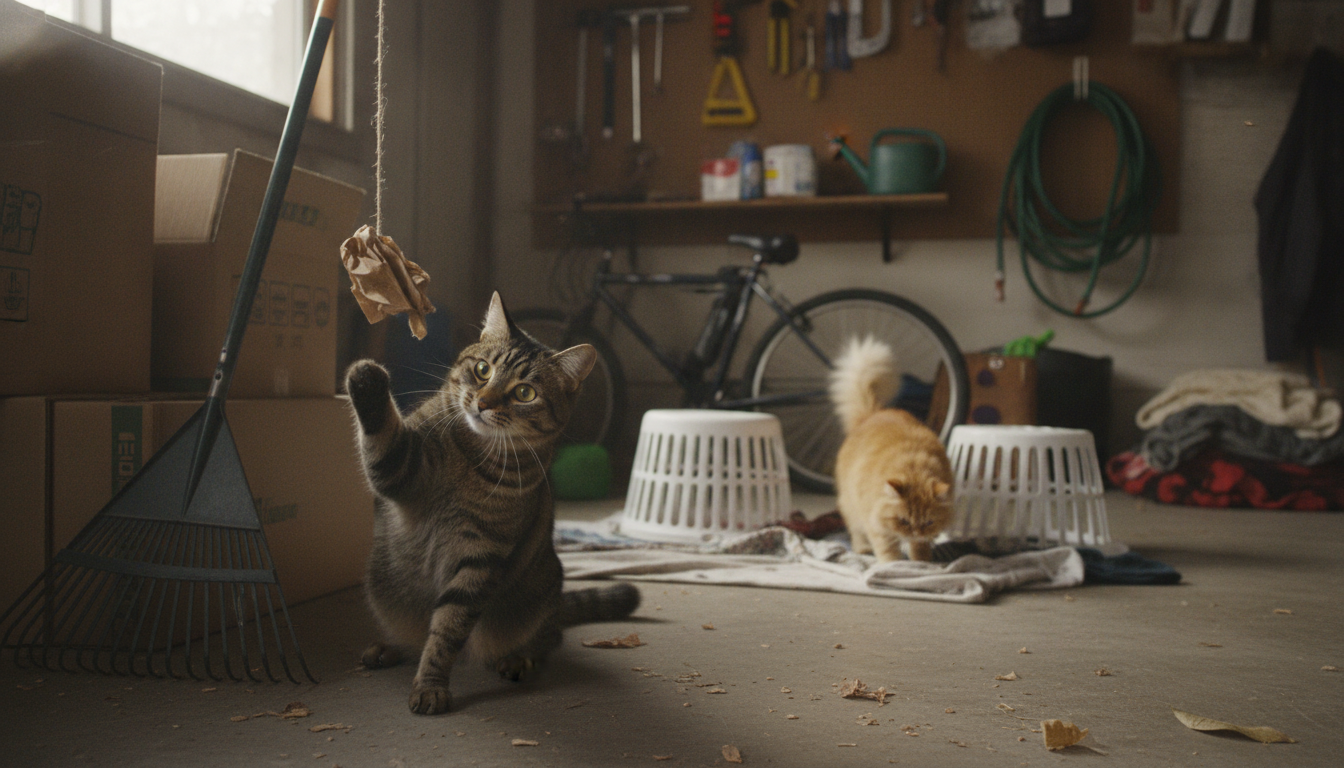
Crumple a sheet of paper into a loose ball, tie a strip of paper into a fluttery ribbon, or use a cardboard tube as a rolling target. Drag the “prey” around corners or behind furniture so your cat gets a short chase, a pounce, and then a win. Keep sessions brief (5–10 minutes), then pause so your cat doesn’t get overstimulated.
Cardboard boxes are instant entertainment. Cut a couple of peek holes, stack two boxes to make a tunnel, or place a paper bag (handles removed) beside a box to create a “choose your route” hideout. Moving the setup to a new spot every few days keeps it interesting.
Instead of serving food in one bowl every time, scatter a portion of kibble across a clean floor area or hide a few pieces in folded paper, empty egg cartons, or inside a cardboard tube with one end lightly pinched. This slows eating and adds a satisfying search-and-find game.
Open blinds for a window perch, set a chair by the window, or place a sturdy box near a safe viewing spot. Bird-watching and people-watching can provide long stretches of calm stimulation, especially when paired with a short play session later.
Leave only a couple of DIY toys out at once, then swap them every few days. That “new toy” feeling often comes from novelty, not cost. For more daily and weekly ideas, visit this indoor cat enrichment checklist.
Common signs include extra vocalizing, getting into cabinets or trash, over-grooming, pestering for attention, or sudden bursts of destructive behavior. A consistent routine of short play sessions and environmental variety usually helps.






Leave a comment